
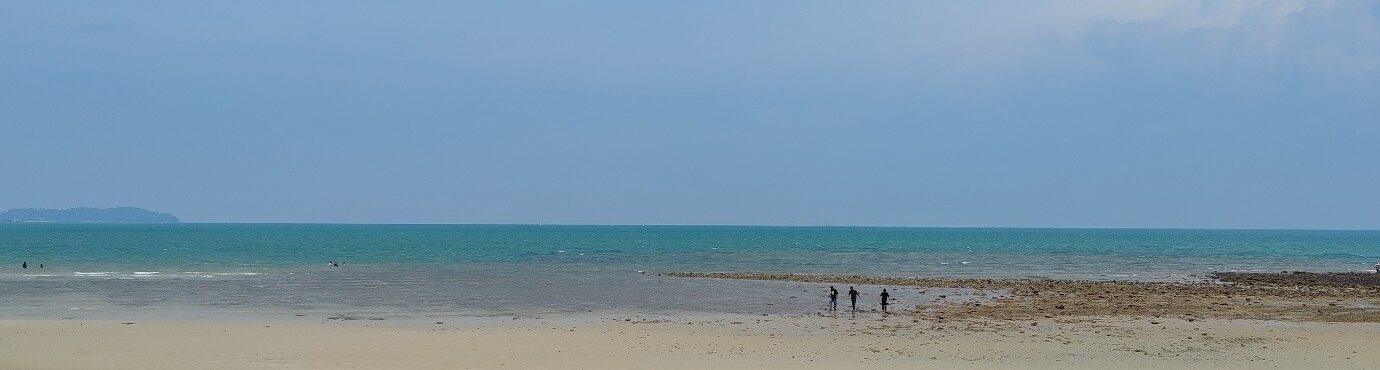
Site observation at Pulau Burung, Port Dickson
-
Coastal wetland conservation
-
Healthy Wetland Nature
-
Wetland values, status and trends
Pulau Burung, Negeri Sembilan is not a newly created mangrove site. Historical records indicate that the island has long supported mangrove vegetation and functioned as a coastal wetland habitat. A site visit was conducted on 14th June 2026, to assess the condition and progress of previous mangrove replanting efforts within the area. The visit was joined by representatives from the Malaysian Nature Society (MNS) – Malacca and Negeri Sembilan Branch as part of a knowledge-sharing session to exchange insights on mangrove restoration practices and site management approaches.
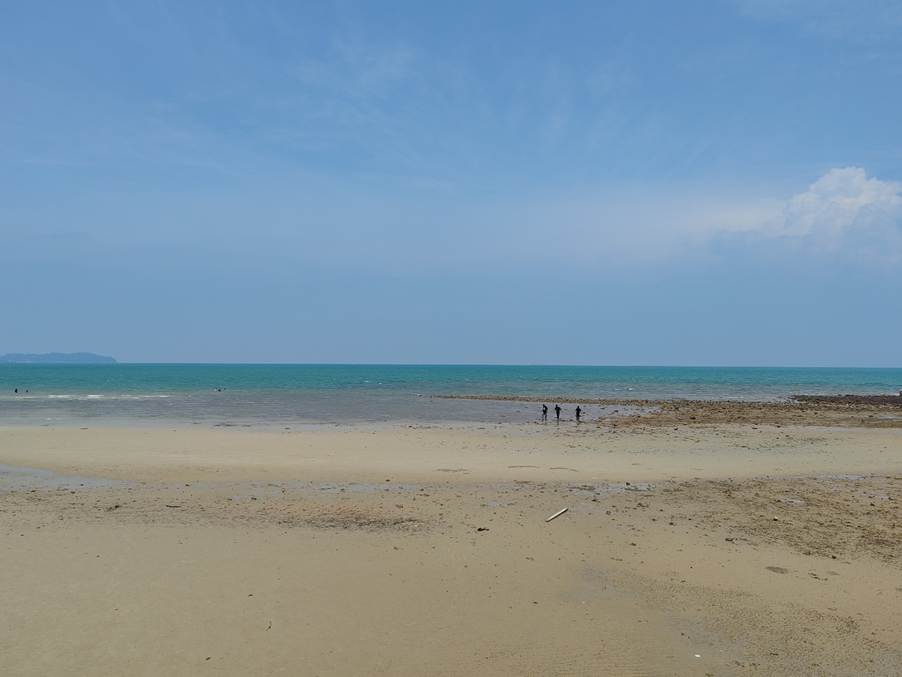
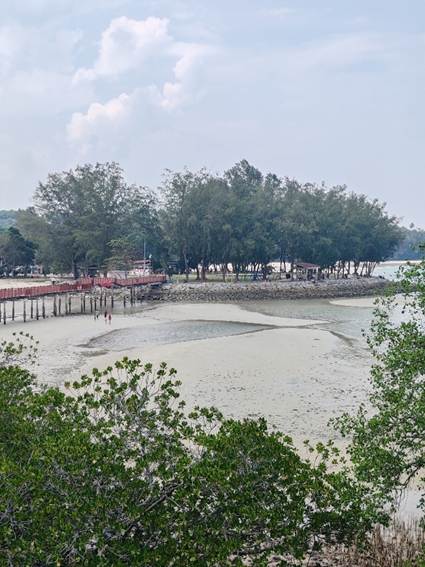
Pulau Burung during low tide.
Past records and field observations indicate that several mangrove planting initiatives have been carried out at the site over the years. However, the majority of the planted seedlings appear to have experienced high mortality, with little evidence of successful establishment from recent planting efforts. Nevertheless a stand of approximately 500 Rhizophora species planted in 2018 has managed to survive and is currently well established. The trees have reached reproductive maturity, with observations confirming active flowering and propagule production. This indicates that the stand is capable of contributing to natural recruitment and regeneration processes within the site.
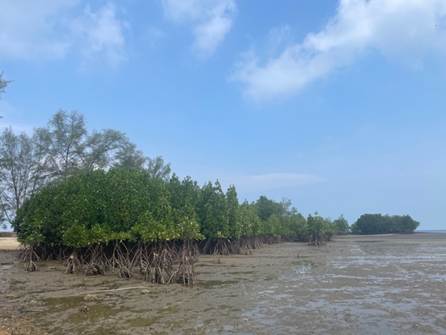
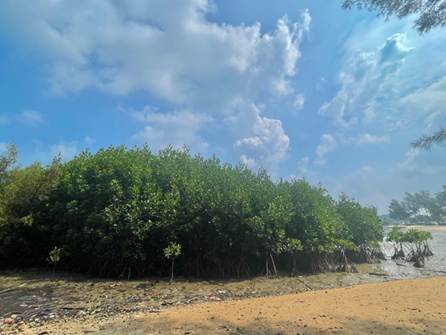
Surviving Rhizophora trees planted in 2018 now form a stretch of healthy and mature mangroves.
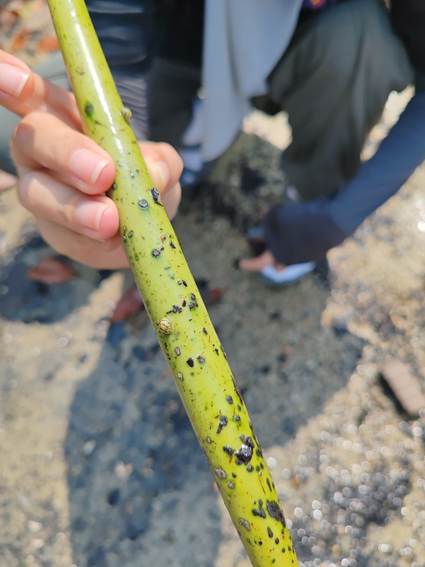
Propagules produced by the existing mangrove trees provide a natural source of seedlings, supporting ongoing regeneration within the site.
It was also found that shoreline protection measures have been implemented through the construction of rock revetments along portions of the coast to mitigate erosion. While the revetments have likely reduced direct shoreline retreat, yet they may have influenced local hydrodynamic conditions and sediment transport processes. Field observations indicate increased sand deposition in the vicinity of the structure; however, further investigation, including hydrodynamic and sediment transport assessments would be required to determine the extent to which the revetment has contributed to these changes.
Based on current site conditions, enrichment planting is not considered a priority management intervention. The site exhibits characteristics of transitioning from an active restoration phase towards a passive restoration approach through assisted natural regeneration. This strategy is often more cost-effective and ecologically appropriate where surviving mature trees are already established and functioning as a reliable source of propagules. Also, the site visit observed the presence of healthy and reproductive mangrove stands, with mature trees flowering and producing propagules. These conditions suggested that natural regeneration processes are already occurring and that the site possesses the biological capacity to recover without further planting interventions.
Provided that hydrological conditions remain suitable and the site is protected from significant disturbances, the mangrove stand is expected to continue recovering through natural recruitment and ecological succession over time. It is therefore recommended that management efforts focus on safeguarding existing vegetation and monitoring natural regeneration, rather than implementing additional planting activities at this stage. Periodic assessments of seedling recruitment, survival rates and site conditions should be undertaken to evaluate recovery progress and inform any future management interventions if required.
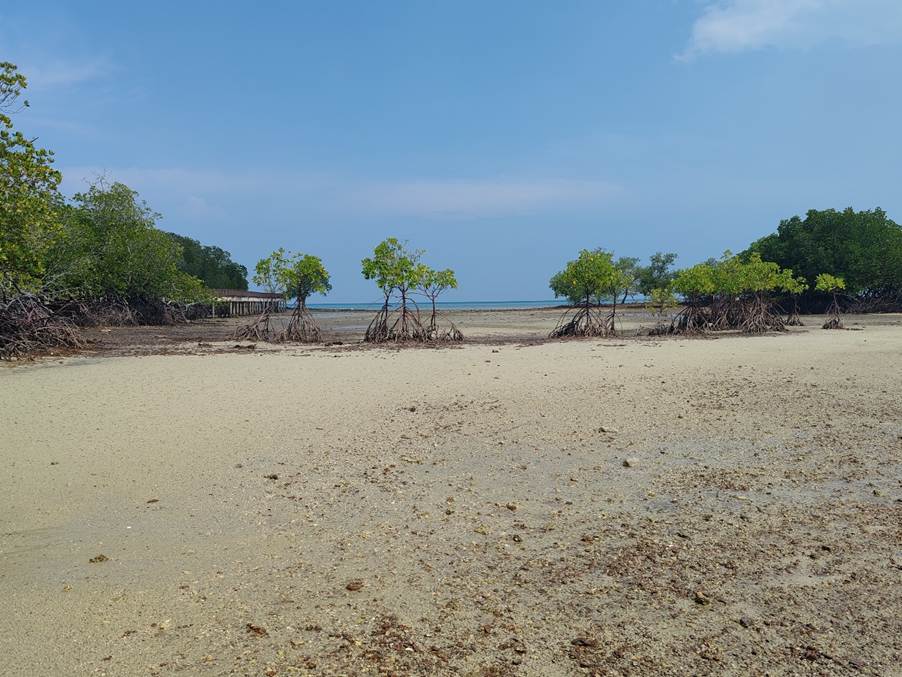
Stunted Rhizophora sighted at site, possibly due to the sandy substrate.